
The Brain-Body Connection: Home Integration Guide
Consistency is the language of the nervous system. By providing this gentle, intentional sensory input, you are helping your child’s brain “graduate” from survival patterns into higher-level learning and ease.
Step 1: The Daily Integration Routine
The Tool: A soft-bristle toothbrush or a sensory brush. The Technique: Use light, steady strokes in the specific directions listed below.
Rooting Reflex (The Cheek)
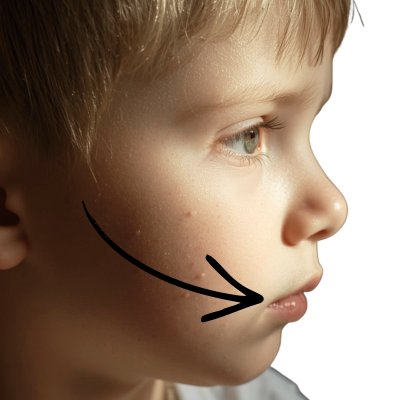
- Rooting Reflex (The Cheek): Stroke from the earlobe along the jawline toward the corner of the mouth.
- We will instruct to either do one side or both based upon our evaluation.
We follow a specific progression to “re-wire” the nervous system without overwhelming it. We will re-evaluate these reflexes at your child’s next re-exam.
- Week 1: 5 reps per area, twice daily.
- Week 2: 10 reps per area, twice daily.
- Week 3: 15 reps per area, twice daily.
- Week 4: 20 reps per area, twice daily.
- Continue adding 5 reps each week until you reach a maximum of 30 reps.
Palmar Reflex (The Hand)
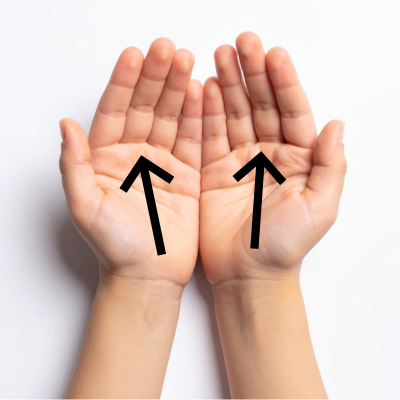
- Palmar Reflex (The Hand): Stroke from the base of the palm upward toward the base of the fingers.
- We will instruct to either do one side or both based upon our evaluation.
We follow a specific progression to “re-wire” the nervous system without overwhelming it. We will re-evaluate these reflexes at your child’s next re-exam.
- Week 1: 5 reps per area, twice daily.
- Week 2: 10 reps per area, twice daily.
- Week 3: 15 reps per area, twice daily.
- Week 4: 20 reps per area, twice daily.
- Continue adding 5 reps each week until you reach a maximum of 30 reps.
Spinal Galant Reflex
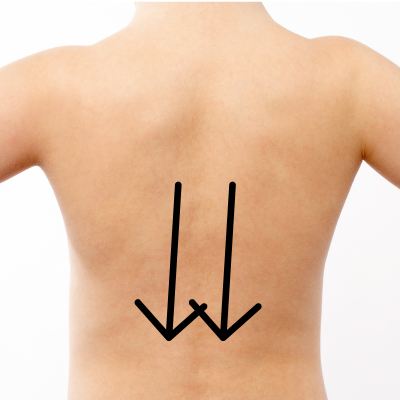
- Spinal Galant Reflex (The Back): Stroke vertically down the back, one inch to the side of the spine.
- We will instruct to either do one side or both based upon our evaluation.
We follow a specific progression to “re-wire” the nervous system without overwhelming it. We will re-evaluate these reflexes at your child’s next re-exam.
- Week 1: 5 reps per area, twice daily.
- Week 2: 10 reps per area, twice daily.
- Week 3: 15 reps per area, twice daily.
- Week 4: 20 reps per area, twice daily.
- Continue adding 5 reps each week until you reach a maximum of 30 reps.
Plantar Reflex (The Foot)
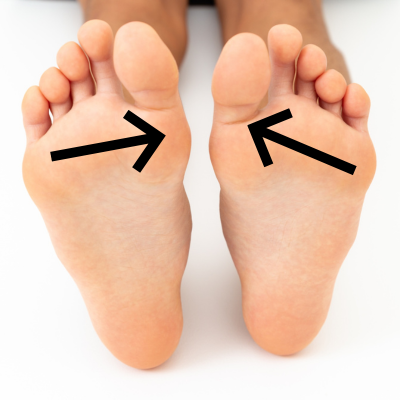
- Plantar Reflex (The Foot): Stroke the foot from the pinkie side of the balm of your foot towards the balm of the foot under the big toe.
- We will instruct to either do one side or both based upon our evaluation.
We follow a specific progression to “re-wire” the nervous system without overwhelming it. We will re-evaluate these reflexes at your child’s next re-exam.
- Week 1: 5 reps per area, twice daily.
- Week 2: 10 reps per area, twice daily.
- Week 3: 15 reps per area, twice daily.
- Week 4: 20 reps per area, twice daily.
- Continue adding 5 reps each week until you reach a maximum of 30 reps.
Babinski Reflex (The Foot)
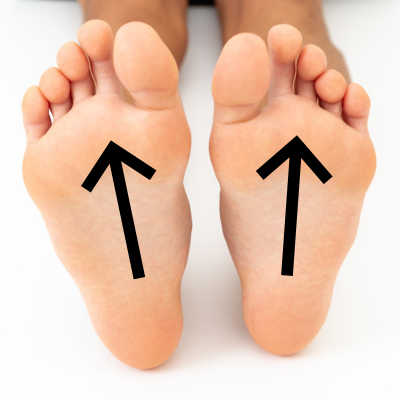
- Babinski Reflex (The Foot): Stroke from the heel up the outer edge of the foot
- We will instruct to either do one side or both based upon our evaluation.
We follow a specific progression to “re-wire” the nervous system without overwhelming it. We will re-evaluate these reflexes at your child’s next re-exam.
- Week 1: 5 reps per area, twice daily.
- Week 2: 10 reps per area, twice daily.
- Week 3: 15 reps per area, twice daily.
- Week 4: 20 reps per area, twice daily.
- Continue adding 5 reps each week until you reach a maximum of 30 reps.
Understanding Your Child’s Brain Development & Maturation
The Bridge from Horizontal to Upright Think of primitive reflexes as the “launch sequence” for your child’s life. Their primary job is to get your child from being horizontal (flat on the ground) to standing on two feet (upright). They are survival mechanisms—built-in software designed to help an infant navigate the world until they are strong enough to take conscious control.
The “Smoke Detector” Problem By the age of one, these reflexes should “integrate,” meaning they turn off and move into the background. However, if they don’t turn off fully, it affects the nervous system by constantly sounding alarms when they aren’t needed.
The Metaphor: Imagine a smoke detector in your kitchen. It’s a vital survival tool if there is a fire. But if that detector is “retained” (stuck in the ON position), it might scream every time you simply make toast or boil water.
When a child has retained reflexes, their nervous system is reacting to “toast” as if it’s a “house fire.” This keeps the survival part of the brain—the fight-or-flight center—permanently switched on.
Beyond Age One When the survival mechanism stays on, it stalls the maturation of the higher brain centers. It’s hard for a child to focus on reading, emotional regulation, or complex movements when their brain is still busy managing “survival” loops that should have been retired months or years ago.
By performing these brushing exercises, we are quieting the “false alarms” and allowing your child’s brain to find its Wellness Path—moving from reactive survival to thriving growth.
Weekly Success Tracker
“Frequency over intensity.” Short, daily sessions create the most durable change.
Parent Pep-Talk: If your child gets “wiggly” or sensitive during brushing, don’t worry! That’s just the brain acknowledging the “false alarm.” Keep it light, make it a game, and celebrate the small wins as their nervous system settles into a state of ease.