
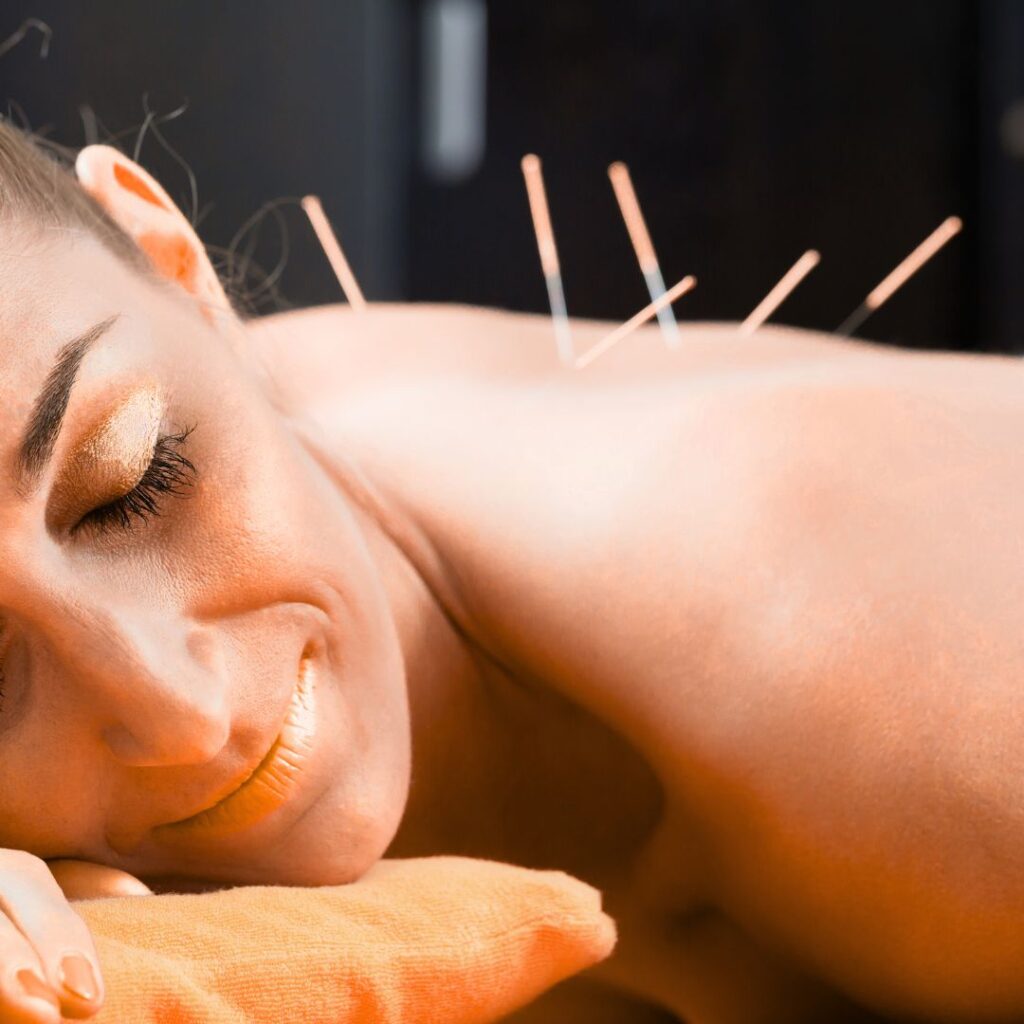
Your Muscle Isn’t the Problem. The Signal Telling It to Stay Tight Is.
Dry Needling Serving Knoxville TN, Morristown & Maryville
You’ve stretched it, massaged it, rested it — and it’s still tight. That’s because chronic muscle tension isn’t a muscle problem. It’s a neurological one. The brain keeps sending the signal to hold on, and until that signal changes, nothing downstream will. Neurological dry needling in Knoxville TN is how we interrupt that loop — resetting the conversation between your nervous system and your muscles so your body can finally let go.
Call or Text (865) 214-7438 | Knoxville · Morristown · Maryville
Who Neurological Dry Needling Is For
This approach is designed for patients dealing with chronic muscle tension, recurring pain patterns, trigger points, movement restriction, or neurological pain that has not fully resolved through stretching, massage, or traditional treatment approaches alone.
What Patients Commonly Use Dry Needling For
- Chronic muscle tension
- Neck and shoulder tightness
- Sciatica and nerve irritation
- Headaches and migraines
- Low back pain
- Trigger points and fascial restriction
- Postural stress patterns
- Neurological pain syndromes
Not acupuncture. Not trigger point therapy. Something more specific.
Dry needling and acupuncture look identical from the outside — same thin needles, same general idea. But they are built on entirely different frameworks. Acupuncture is rooted in ancient meridian theory and energy flow. Neurological dry needling is rooted in modern anatomy and the science of how your nervous system communicates with your muscles.
Here’s the best way to think about it: a chronically tight or knotted muscle is like a computer program that has crashed and is stuck in a loop. No matter how much you stretch it or massage it, the brain keeps sending the same signal — stay tight. The needle is not the treatment. The needle is the tool that starts a conversation. When it contacts the right neurological point, it works like hitting the reset button on a frozen router: it breaks the electrical loop, flushes out the inflammatory chemistry that has been accumulating, and sends the brain a new message — you can let go now.
The key word in our approach is neurological. We are not just looking for sore spots to poke. We are identifying where the nerve supply to a muscle is being compromised — often at the spine — and working backward from there.
Standard Dry Needling
Finds the sore spot (trigger point) and needles it until the muscle twitches. Effective short-term for local muscle release.
Addresses the wall.
Neurological Dry Needling
Identifies the nerve source of the dysfunction — often at the spine — and works from the blueprint down. Muscle release is deeper and more thorough.
Addresses the blueprint.
Patients searching for dry needling in Knoxville, Maryville, and Morristown TN often come to The Wellness Path looking for a more neurologically-focused approach that integrates chiropractic care, nervous system assessment, and soft tissue treatment together.
We don’t use this for tight muscles. We use it for neurological dysfunction.
The patients who respond best to neurological dry needling are typically people who have already tried the standard routes — stretching, massage, physical therapy, rest — and are still stuck. Here’s who we most commonly see:
Desk Warriors
• Chronic tension headaches and migraines
• Upper trap and neck tightness from screen time
• Jaw pain and TMJ dysfunction
• Carpal tunnel-like symptoms
• Numbness or tingling in hands or feet
Athletes
• IT Band syndrome and runner’s knee
• Tennis elbow and golfer’s elbow
• Recurring hamstring and calf strains
• Plantar fasciitis
• Performance plateau from compensatory movement patterns
Chronic Pain & Post-Surgical
• Sciatica and lower back pain
• Stubborn scar tissue after knee or hip replacement
• Shutdown muscles post-surgery
• Chronic pain that has not responded to other care
• Nervous system stuck in fight-or-flight and unable to relax
Most practitioners needle the sore spot. We trace the signal back to its source.
The standard dry needling model used by most physical therapists is trigger-point focused: find the knot, needle it, get a twitch response, release the muscle. It works — for a while. But if the nerve supplying that muscle is being compromised at the spine, the muscle will simply tighten again. You haven’t fixed the wiring. You’ve just reset the breaker.
At The Wellness Path, Dr. Vic approaches dry needling through the same neurological lens he applies to everything: where is the interference in the nervous system, and what is the most efficient way to remove it? Dry needling in our office is always integrated with chiropractic care — not offered as a standalone service — because the two work in a way that neither can fully achieve alone.
The Needle Reduces the Noise
Dry needling releases the muscular tension and inflammatory chemistry that has built up around the affected area. This “quiets” the signal from the muscle to the brain — reducing the interference that makes the chiropractic adjustment harder to deliver and harder to hold.
The Adjustment Fixes the Source
With the muscle released and the noise reduced, the chiropractic adjustment can work more precisely and more comfortably — and the neurological correction holds longer. We aren’t just putting out the fire. We’re fixing the faulty wiring that started it.
3 to 5 high-quality, strategically placed needles will outperform 20 random ones every time. We aren’t looking to cover the most ground. We’re looking for the right conversation.
Here’s exactly what a session looks like.
Most patients are surprised by two things: how little they feel the needle going in, and how deeply relaxed they feel by the time it comes out.
2. The Needle Entry
The needles are hair-thin. Most patients feel a light tap — if anything at all — as each needle is placed. There is no injection, no medication, no fluid. Just a precise contact with the nervous system.
3. The Twitch Response
When a needle contacts the right neurological point, you may feel a deep, heavy ache lasting 2–3 seconds, often followed by an involuntary muscle twitch. The twitch is a good sign — it is the muscle officially rebooting. After it passes, most patients describe a sensation of the area becoming warm, heavy, and deeply relaxed.
5. The After-Effect
The needling portion takes approximately 10–15 minutes, but the healing response continues for 24–48 hours as inflammation clears and the tissue rebuilds. You may feel a productive soreness — similar to a good workout — in the treated area for several hours. Drink plenty of water. Many patients notice they feel lighter and more mobile the following morning.
The questions we hear before every first session.
Does dry needling hurt?
The sensation is different from what most people expect. The needle entry itself — if felt at all — is a light tap, nothing like a standard injection. When the needle contacts the target point, you may feel a deep, heavy ache lasting 2–3 seconds, sometimes accompanied by a brief involuntary muscle twitch. That twitch is a sign the nervous system is responding. After it passes, many patients notice a release — warmth, heaviness, and relaxation in the area. ‘Interesting’ is a more accurate word than ‘painful.’
What is the difference between dry needling and acupuncture?
Dry needling and acupuncture use similar-looking needles but are built on entirely different foundations. Acupuncture is rooted in traditional Chinese medicine, working along energy meridians to restore flow. Neurological dry needling is based on Western anatomy and neuroscience — targeting specific muscles, nerves, and connective tissue to interrupt dysfunctional neurological patterns. At The Wellness Path, our approach is specifically neurological: we are tracing muscle dysfunction back to its nerve source, not simply addressing the sore spot.
Is dry needling just a temporary fix?
Standard trigger-point dry needling can be temporary — because it releases the muscle without addressing why the muscle was tight in the first place. At The Wellness Path, neurological dry needling is always paired with chiropractic care, which addresses the nerve supply to the affected muscle at the spinal level. By treating both the downstream effect (the muscle) and the upstream source (the nerve), the results are significantly more durable. We aren’t just resetting the breaker — we’re fixing the faulty wiring.
How many needles are used in a session?
Fewer than most people expect. We are not looking to cover the most surface area — we are looking for the most neurologically significant points. In most sessions, 3–5 precisely placed needles produce better results than 20 random ones. Quality of placement matters far more than quantity. Dr. Vic identifies the highest-leverage points based on your neurological assessment and exam findings before any needles are placed.
Will I be sore after a dry needling session?
Many patients experience what we call productive soreness — a sensation similar to how a muscle feels after an effective workout — in the treated area for several hours following a session. This is a normal part of the healing response as inflammation clears and tissue remodeling begins. Drinking plenty of water helps. Most patients wake up the following morning feeling noticeably more mobile and less restricted than they have in months.
Is dry needling safe?
Dry needling is generally considered safe when performed by a properly trained provider. At The Wellness Path, neurological dry needling is only used after a detailed neurological and movement assessment to determine whether it is appropriate for your condition and goals. We use sterile, single-use needles and integrate the treatment with chiropractic care to support safer, more effective results.
Does dry needling help with sciatica?
Dry needling may help reduce sciatica-related symptoms when abnormal muscle tension, nerve irritation, or compensation patterns are contributing to the pain. At The Wellness Path, dry needling is combined with neuro-focused chiropractic care to address both the muscular tension and the underlying neurological stress patterns affecting the sciatic nerve pathway.
If you’ve been stretching the same tight spot for months without durable relief — the muscle isn’t the problem.
Neurological dry needling is available to adult patients and athletes at The Wellness Path. It is always integrated with your chiropractic care — never a standalone service — because that combination is where the real results happen. Book your appointment and let’s find the source.
Call or Text: (865) 214-7438
Knoxville · Morristown · Maryville | East Tennessee