
When the Skull Is Under Pressure, Everything Downstream Suffers.
Nasal Release Technique Serving Knoxville TN, Morristown & Maryville
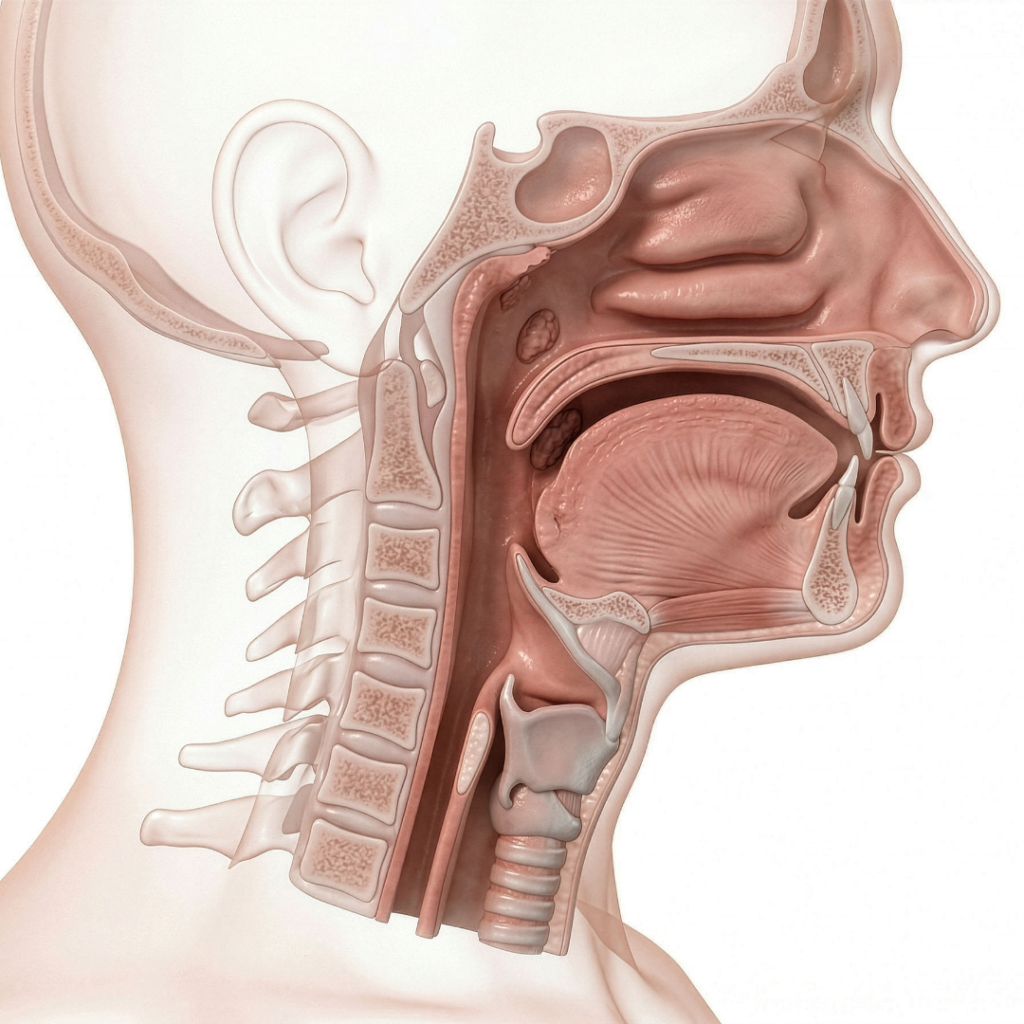
Nasal release technique in Knoxville TN addresses the structural causes behind chronic sinus pressure, brain fog, post-concussion symptoms, migraines, disrupted sleep, and jaw pain — the ones that nasal spray, medication, and even chiropractic adjustments can’t fully reach. The Nasal Release Technique works from the inside out, releasing locked cranial bones and restoring the natural rhythm and drainage of your skull. For patients who have tried everything else, it is often the missing piece.
Call or Text (865) 214-7438 | Knoxville · Morristown · Maryville
What Patients Commonly Seek Nasal Release Technique For
- Chronic sinus pressure and congestion
- Headaches and migraines
- Post-concussion cranial tension
- Difficulty breathing through the nose
- Brain fog and neurological overwhelm
- TMJ and facial tension
- Sleep and oxygenation concerns
- Nervous system stress patterns
Your skull is not one solid bone. And that’s the whole point.
Most people picture the skull as a single, fixed helmet of bone. In reality, it is made of 22 individual plates designed to have a tiny but critical amount of movement — what’s called micro-movement. That built-in flexibility allows your brain to expand and contract with each breath, allows cerebrospinal fluid to circulate freely, and allows internal pressure to regulate naturally.
When those cranial plates become jammed or locked — from a head injury, a difficult birth, chronic sinus inflammation, dental trauma, or accumulated physical stress — that micro-movement stops. Internal pressure builds. The cerebrospinal fluid that bathes your brain and spinal cord can’t flow freely. The nervous system, housed inside a pressurized container that is no longer moving correctly, begins to show the strain.
Think of it like a pressurized cabin. When the pressure is equalized, everything functions normally. When it’s not, you feel it everywhere — in your head, your focus, your breathing, your sleep, your mood.
The Nasal Release Technique uses a small, specialized balloon introduced into the nasal passage to deliver a brief, controlled burst of internal pressure. That pressure — applied for less than one second — encourages the locked cranial bones to release from the inside out. The result is often improved cranial mobility, drainage, and reduced pressure patterns. Many patients notice an immediate change in how their breathing feels.
Chiropractic adjustments clear the wires — the spinal nerves. NRT clears the housing — the skull itself. For many patients, it is the final piece of the neurological puzzle.
People come to NRT when they feel stuck in ways medicine hasn’t reached.
Most patients who find their way to NRT have already worked through the standard options — ENTs, allergists, neurologists, medication — and are still living with symptoms that don’t fully resolve. Here’s who we most commonly see:
Head, Sinus, and Airway
• Chronic sinus pressure and congestion unresponsive to medication
• Deviated septum — structural narrowing of the nasal passage
• Chronic mouth breathing and restricted nasal airflow
• Snoring and sleep apnea (structural component)
• Recurrent sinus infections
Brain & Neurological
• Post-concussion syndrome — brain fog, light sensitivity, persistent headaches
• Traumatic brain injury (TBI) recovery
• Migraines and tension headaches centered behind the eyes or at the skull base
• Brain fog and cognitive heaviness in high-performing adults
• Headaches that have not responded to chiropractic care alone
Jaw, Sleep & Structural
TMJ dysfunction and chronic jaw pain (the roof of the mouth and nasal bones are structurally linked to the jaw), sleep disruption tied to airway restriction, and patients whose chiropractic adjustments are not holding as expected — often because the cranial structure above the spine is still under unresolved pressure.
The Sphenoid Connection: At the center of the skull sits a bone called the sphenoid — the keystone of the entire cranial structure. If the sphenoid is tilted or compressed, it is theorized to influence hormonal regulation (through its relationship with the pituitary gland), vision, and the function of multiple cranial nerves. NRT is one of the only techniques capable of directly influencing sphenoid mobility. For patients with complex, multi-system symptoms, this is often the missing variable.
ENTs treat what’s inside the nose. We treat the structure surrounding it.
ENTs and allergists approach nasal and sinus issues from a tissue and infection perspective — they look at inflammation, polyps, pathogens, and mucous membranes. That is their domain and they are excellent at it. But structural cranial compression — the locked plates, the restricted micro-movement, the impaired CSF flow — is outside their scope. No nasal spray addresses a jammed sphenoid.
As a neurological chiropractor, Dr. Vic approaches the skull the same way he approaches the spine: as a structural container for the nervous system whose alignment and mobility have direct consequences for everything inside it. NRT is not a sinus treatment in his hands — it is a neurological reset.
Patients from Knoxville, Farragut, Hardin Valley, Powell, Oak Ridge, Maryville, Morristown, and surrounding East Tennessee communities choose The Wellness Path when searching for a more neurological approach to sinus pressure, headaches, cranial tension, and nervous system stress.
CSF Flow Restoration
Cerebrospinal fluid bathes the brain and spinal cord, delivering nutrients and clearing waste. When cranial bones are jammed, CSF flow is restricted. Nasal Release Technique may help reduce cranial tension and improve neurological function by addressing restriction patterns within the cranial and nasal structures.
Cranial-Spinal Integration
A perfectly aligned spine under a skull that is still under pressure will not hold its correction as well. NRT addresses the top of the system so that chiropractic adjustments can take full effect — and stay.
Nervous System Regulation
Airway restriction keeps the nervous system in a chronic sympathetic state — the body interprets restricted breathing as a threat. When the airway opens and cranial pressure releases, the nervous system can finally shift out of survival mode.

It is faster than you think. Here is exactly what happens.
The most common reaction after a first NRT session is: ‘That’s it?’ The whole procedure takes less than two minutes. Here’s the walkthrough:
1. Preparation
Dr. Vic applies a small amount of lubricant to a specialized, latex or latex-free balloon attached to a pressure bulb. The balloon is tiny — nothing like what you’re imagining.
2. Placement
The balloon is gently guided into one of the three nasal passageways on one side of your nose. You will feel a mild, cool sensation — similar to getting a small amount of water in your nose while swimming. Slightly unusual. Not painful.
3. The Breath & Release
Dr. Vic asks you to take a deep breath and hold it. In under one second, he quickly inflates and fully deflates the balloon. The entire inflation-deflation cycle happens faster than a blink.
4. What You Hear & Feel
You will hear a crackling or popping sound inside your head. This is not bone breaking — it is the sutures and plates of the skull releasing compression, the same way a joint releases during an adjustment. The sensation is intense for approximately one second. Then it is over, replaced almost immediately by a sense of opening and space.
5. The Immediate Response
Most patients take a deep, involuntary breath within seconds and say some version of ‘I can actually breathe.’ Many notice a sudden clarity or spaciousness in their head. Some feel a brief head rush as pressure equalizes. The procedure is typically repeated on both sides and across multiple passageways in a complete session.
6. The 24–48 Hours After
Expect a drainage sensation as sinuses clear and fluids that have been stagnant begin to move. Some patients feel deeply energized. Others feel mildly fatigued as the body adapts to the new structural state. Within 24 hours, most patients notice that their breathing feels different, their bite may feel more even, and their vision may feel sharper. A series of 4–6 sessions is typically recommended to fully unlock the layers of cranial compression.
What Patients Often Notice After NRT
- Clearer nasal breathing
- Reduced head pressure
- Improved mental clarity
- Less facial and jaw tension
- Improved sleep quality
- A feeling of openness or decompression
The questions every skeptic asks before saying yes.
Is Nasal Release Technique (NRT) safe?
Yes. NRT is performed using specialized equipment with a precisely controlled amount of pressure — the goal is to encourage the cranial bones to release, not to force them. The technique works with the natural design of the skull, which is built to move in small ways. At The Wellness Path, NRT is only performed by Dr. Vic Manzo, a trained neurological chiropractor who uses NRT as part of a comprehensive neurological care plan — not as a standalone procedure. Patients with active nasal infections or significant nasal trauma should discuss their history prior to treatment.
Does the Nasal Release Technique hurt?
The sensation is intense for approximately one second — similar to the pressure you feel when diving into a pool or quickly descending in altitude. It is not a sharp or prolonged pain. The moment the balloon deflates, the pressure converts almost immediately into a sensation of opening and relief. Most patients describe the one second of intensity as well worth the relief that follows. The procedure is typically described as ‘weird but not bad’ by first-time patients.
Why would a chiropractor do something in the nose? Shouldn’t this be an ENT?
ENTs focus on the tissues inside the nasal passage — inflammation, infection, polyps, structural abnormalities of the mucous membranes. Neurological chiropractors focus on the bony structure surrounding those tissues and its relationship to the nervous system. When the cranial bones are compressed or locked, no amount of medication or tissue-level treatment addresses the structural pressure. NRT works on the container — the skull itself — so the nervous system inside it can function without restriction. The two approaches are complementary, not competitive.
Can NRT help with post-concussion symptoms and brain fog?
NRT may offer supportive, complementary care for post-concussion symptoms and brain fog — it is not a replacement for medical concussion care. A concussion is a structural event that can compress and shift cranial bones and affect CSF flow, contributing to a nervous system under chronic low-grade stress. NRT is designed to support cranial mobility and CSF flow alongside — not instead of — care from a neurologist or other medical provider. Some patients with post-concussion brain fog, light sensitivity, and persistent headaches report noticing a difference after a series of NRT sessions, alongside their medical care.
How many NRT sessions will I need?
Most patients begin with a series of 4–6 sessions to progressively release the layers of cranial compression that have built up over time. The skull does not unlock in a single session — each treatment releases a layer, and the effects build cumulatively. Once full cranial mobility is restored, many patients transition to one or two maintenance sessions per year — often timed around allergy season or periods of high stress. Your recommended number of sessions will be based on Dr. Vic’s assessment of your cranial tension and your specific symptoms.
If the pressure in your head has been your constant companion — it doesn’t have to be.
NRT is available at The Wellness Path as part of a comprehensive neurological care plan. If you’ve been dealing with chronic sinus pressure, brain fog, post-concussion symptoms, restricted breathing, or migraines that haven’t responded to other treatment — this may be the conversation worth having. Book your appointment and let’s assess what’s happening structurally.
Call or Text: (865) 214-7438
Knoxville · Morristown · Maryville | East Tennessee