
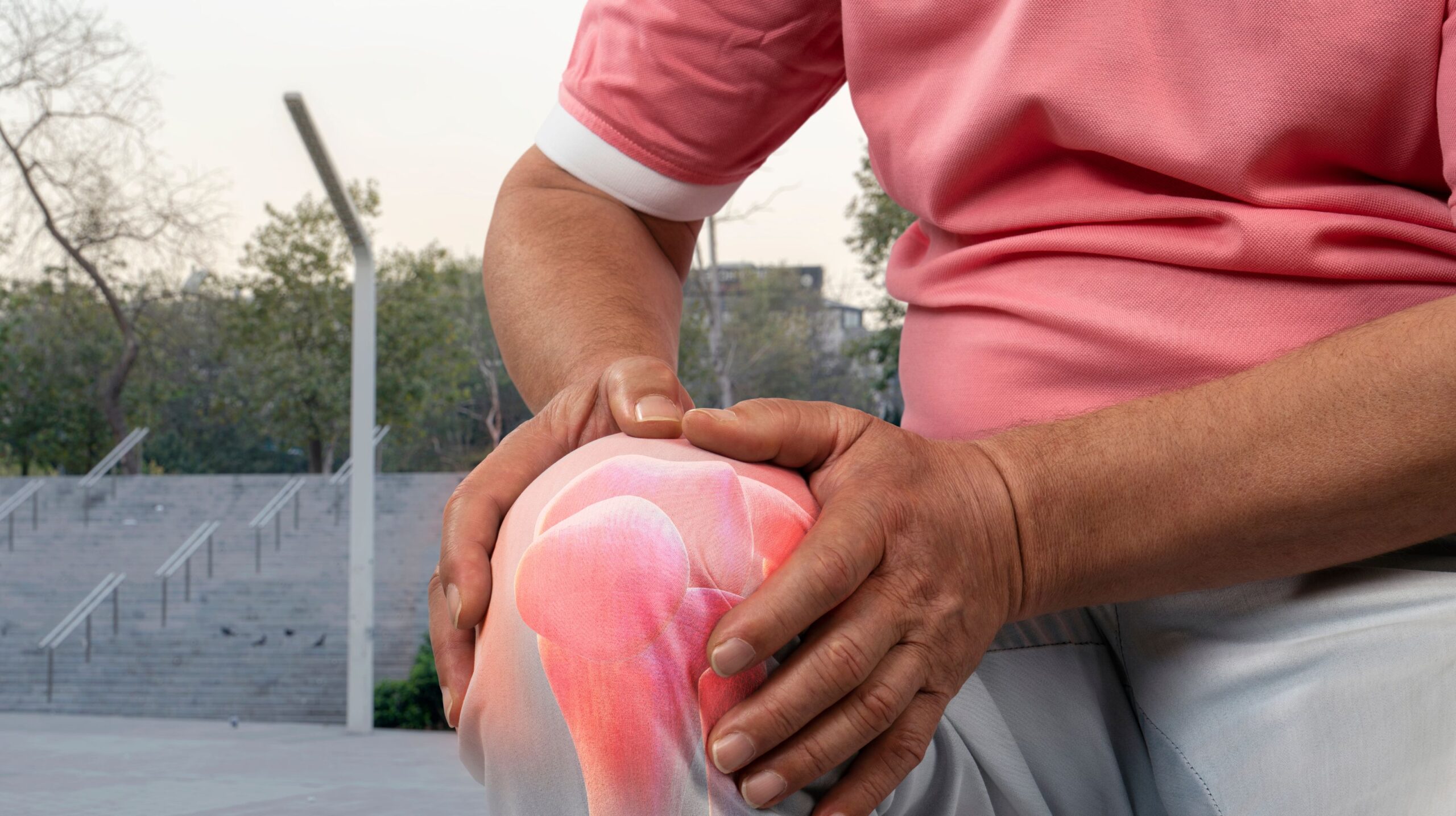
How Chiropractic Care Helps Knee Pain
Chiropractic Care for Knee Pain, IT Band, and Lower Extremity Conditions — The Wellness Path · Knoxville · Maryville · Morristown TennesseeThe knee is a joint caught between two others. Above it the hip and pelvis control the alignment and rotation forces that pass through it. Below it the foot and ankle affect the mechanical loading at every step. And behind all of it the lumbar and sacral nerve supply controls the muscles that stabilize the knee in the first place. When knee pain develops, the knee is almost never where the problem started.
Knee pain — the patellofemoral pain with stairs and squatting, the IT band syndrome from running, the medial joint line aching, and the degenerative knee pain that makes simple walking difficult — is significantly influenced by the biomechanical chain above the knee. Pelvic and sacral alignment, hip external rotator function, and lumbar nerve root supply to the lower extremity are all contributors that chiropractic care directly addresses.
At The Wellness Path we address knee pain by identifying the full neurological and structural picture — from the lumbar nerve supply through the hip mechanics and into the local knee joint — and correcting the source rather than just treating the knee in isolation.
Why Your Nervous System Is at the Center of This
Lumbar Nerve Root Compromise and Quadriceps Weakness
The femoral nerve — supplying the quadriceps — originates from L2, L3, and L4. When subluxation is present at these levels, quadriceps activation and VMO recruitment become impaired. The knee cannot track properly, the patella is loaded abnormally, and the patellar tendon comes under excessive stress. This is the neurological pattern underlying most anterior knee pain, patellofemoral syndrome, and patellar tendinopathy presentations.
Hip and Pelvic Mechanics Affecting Knee Loading
Every step transfers force from the foot through the knee and into the hip and pelvis. When hip abductor weakness or pelvic unlevelness is present — frequently driven by lumbar and sacral subluxation — the knee is loaded in a valgus collapse pattern at every step. Over time this creates the medial compartment loading, cartilage stress, and ligamentous strain that shows up as chronic knee pain. Correcting the pelvic and lumbar source changes the mechanical environment the knee is living in.
IT Band Syndrome and Lateral Knee Pain
The iliotibial band syndrome — lateral knee pain worsening with running, cycling, and stair descent — is almost always driven by TFL and gluteal hypertonicity secondary to lumbar and sacral neurological imbalance. The IT band does not stretch — treating it with foam rolling and stretching addresses the expression of the problem. Releasing the muscular tension pattern generating the IT band tension and correcting the neurological source is what resolves it.
How We Address This at The Wellness Path
Lumbar and Sacral TRT Correction
Dr. Vic addresses the specific lumbar and sacral subluxation patterns compromising the nerve supply to the knee musculature. Restoring the neurological balance to the quadriceps, hamstrings, and gluteal muscles changes the mechanical loading at the knee — producing improvement in the knee mechanics that local treatment cannot achieve because it does not address the neurological source.
Dry Needling for the Quadriceps, IT Band, and Popliteal Muscles
Dr. Vic integrates targeted neurological dry needling into the quadriceps VMO, the TFL and IT band musculature, the biceps femoris, and the popliteal muscles as indicated — releasing the chronic contraction and trigger point patterns that are maintaining the abnormal knee loading between adjustments.
functional neurological assessment for Objective Assessment
coordination and reflex testing and respiratory and reflex testing identify the lumbar and sacral neurological pattern driving the knee presentation and track the improvement throughout care — providing objective confirmation that the neurological source is changing as the knee symptoms resolve.
What to Expect From Care
- Reduction in the constant aching pain in and around the knee joint
- Improvement in anterior knee pain with stairs, squatting, and prolonged sitting
- Reduction in lateral knee pain with walking, running, and stair descent
- Better knee stability — the giving way sensation reduces as quadriceps and hamstring coordination improves
- Reduced morning stiffness and improved ease of first movement after rest
- Return to running, hiking, and sport without knee pain limiting participation
When Neurological Dry Needling Is Part of the Picture
For knee presentations with significant quadriceps inhibition, IT band tightness, or popliteal muscle involvement, Dr. Vic integrates neurological dry needling alongside Torque Release Technique adjustments. Learn more about neurological dry needling →
Related Conditions
Often driven by the same underlying patterns:
Your Knee Has Been Compensating Long Enough. Let’s Address Why.
Book your NeuroFoundation Assessment — $197 for new patients — at any of our three East Tennessee locations.
Book Your NeuroFoundation AssessmentCall or text (865) 214-7438 · Knoxville · Maryville · Morristown